

All posts by webmaster

Bioethics in Pakistan: Finding its Feet in Academia

Bioethics in Pakistan: Finding its Feet in Academia

Aamir Jafarey
Aamir Jafarey, Professor, Centre of Biomedical Ethics and Culture, SIUT, Karachi
Volume 13 Issue 1 June 2017

“Double shot, extra hot, please” I said as I ordered my coffee at a Starbucks in Charlottesville, in the vicinity of the University of Virginia. The extra caffeine was required to prime my brain for the discussion that I was about to have with Dr Moazam, who was at that time based in this quaint little university town, completing her PhD with a focus on bioethics from the Department of Religious Studies, University of Virginia.

This was 14 years ago. I had borrowed by brothers’ old van, and driven down from Boston, where I was pursuing my year-long Fellowship in International Research Ethics and the Harvard School of Public Health as a Fogarty Fellow, to meet Dr Moazam. Our one point agenda was a discussion on the yet very nebulous concept of a bioethics centre in Pakistan, an idea floated a couple of years earlier by Dr Adib Rizvi, Director of SIUT where Dr Moazam had been doing her research for her PhD.

I can’t claim that we had at that time envisioned CBEC as it had turned out today, in its early teens now. But bioethics in Pakistan predates CBEC by at least 20 years. The first formal space for bioethics was created in 1984 in the Aga Khan University (AKU) in Karachi, where Biomedical ethics was gradually introduced in the curriculum of medical students in AKU by Dr Jack Bryant, an American public health physician and the then Chairman of the Department of Community Health Sciences. This was later also extended into the courses of the School of Nursing at AKU. Bioethics thus earned its small space in the classroom in at least one medical institution in the country.

In addition to these educational initiatives, an informal Bioethics Group (BG) was initiated at AKU in 1997 by Dr Moazam, comprising of clinicians and nurses who had an interest in bioethics. The BG, now in its 20th year, still meets fortnightly over lunch to discuss ethical issues and has emerged as a premier self-education and discussion forum for bioethics.

The late 1990s also saw an enhanced demand for workshops on research ethics, and training for IRB members all over Pakistan, more so from Karachi. The initial awareness and interest in bioethics was limited to research ethics, driven by pragmatic reasons for training people to populate IRBs and open possibilities for external findings for their research, publication and accreditation.  This was not unique for Pakistan, and much of the developing world academia was scrambling to enhance capacity in this area. Many individuals, including this author, availed opportunities through programs focusing on research ethics (with some having a broader focus on bioethics as well) funded by the Fogarty International Centre of the National Institutes of Health of the US government at institutions in Canada, US, and Australia. What is noteworthy is that whereas these were all academics who took time off from their clinical work to pursue bioethics, it was purely based on their own initiative and not as a result of a focused institutional strategy to enhance bioethics capacity, with institutional support limited to granting an extended leave of absence for them. Another interesting aspect in this initial phase of formal bioethics capacity enhancement is that whereas these foreign opportunities were open to all, it was only members of the medical community that availed of them. The people who shaped bioethics in Pakistan were therefore primarily from the medical sciences, and with little no involvement of philosophers, social scientists, religious scholars or lawyers.

In Pakistan, bioethics was born at a medical university, and remained there for about 15 years, fueled primarily by individual efforts. It was only in the early 2000s that it finally became a serious academic discourse with the advent of indigenous, degree awarding bioethics programs, and a wider circle of participants.

The first academic degree program that was offered in bioethics in the country was CBECs Postgraduate Diploma in Biomedical Ethics (PGD) which commenced in 2006 and a Masters in Bioethics (MBE) which commenced in 2010. Whereas both these programs are continuing to date, a Masters in Bioethics program started by AKU in 2009 with NIH funding, ceased after the funding dried up in 2012, and the university did not step in to sustain it.

All these programs have been open to medical as well as non-medical applicants; however have attracted mostly medical scientists, clinicians and researchers with very few social scientists, educationists, journalists expressing an interest in this new emerging discipline in the county. Philosophers and religious scholars, generally seen to be in the leadership of bioethics initiatives in the West, have practically had to be coaxed to contribute to the discipline, as faculty in academic sessions on philosophy and religion, which are integral to any bioethics coursework. Whereas several medical institutions have now taken the initiative of starting bioethics departments, and offer courses at different levels, to the best of the authors’ knowledge, no philosophy department in the country offers courses in bioethics as yet.

From classrooms to boardrooms, being “done” sitting on swivel chairs, bioethics in Pakistan has defined for itself an indoor trajectory and never really taken on the mantle of activism or even advocacy in any sustained and meaningful manner. The one major legislation on a bioethical matter, organ trade which impacted the poorest of the poor, was initiated and spearheaded by an advocacy campaign by SIUT, with the medical fraternity and media contributing. The role of the bioethics community in general was at best, peripheral.

The bioethics discourse in the country has up till now also generally steered clear of “non-medical” ethical issues, like for instance the exploitative displacement of poor communities for multimillion rupee development initiatives aimed for the rich, or bonded labor, honor killings and so on. One reason for this is perhaps the preponderance of medical fraternity in bioethics in Pakistan, and plenty of “hot” issues within the medical domain to discuss.

This rather narrow focus on clinical and research of bioethics is bound to change as non-medical people pursue it as an academic discipline. Already, through CBEC, advances have been made into school systems, with structured workshops being offered to high school teachers, and sporadic sessions being organized for students.

One major challenge for bioethics to emerge as a choice destination for emerging academics is that there is practically no return on investment possibilities at the moment in the country for anyone investing time and effort in a degree in bioethics. There is also still hardly any meaningful “official” recognition for bioethics, with the Pakistan Medical and Dental Council, the College of Physicians and Surgeons of Pakistan and the Higher Education Commission yet to make any space for bioethics in their respective domains. Even with the introduction of academic degree level educational programs in Pakistan, bioethics remains very much a personal quest, with no real career prospects.

What does History have to do with Ethics?

What does History have to do with Ethics?

Taymiya R.Zaman
Taymiya R. Zaman, Associate Professor and Historian, University of San Francisco, USA.
Volume 14 Issue 2 December 2018

When most people think about the word “history,” they think history refers to “things that happened in the past.” But to historians, History with a capital H is a discipline that teaches you how to think about the past. To do so, we read sources written by people from the past as a means of understanding them on their own terms. Reading sources from the past (primary sources) is harder than it looks, not just because they are often written in languages we don’t speak, but also because of a human tendency to project our own norms and values onto others.

To people from the distant past, our norms would have made no sense. For instance, we live in a world made up of nations, fixed boundaries, and passports, but people living in say, the Mughal Empire in seventeenth century India, would find the idea of a nation strange. They would understand natural boundaries, such as those created by a river or a mountain range, but they would not understand boundaries that had to do with imaginary lines drawn across land by human beings. Similarly, modern people are likely to believe we should elect our leaders. But people in the past would have felt that a world in which anyone could govern was a world that had succumbed to disorder because governance was for those with divine lineage only. Consequently, when we ask questions of the past, we must make sure we are not imposing values that matter to us, e.g. equality or democracy, onto others to whom these values would not have held much meaning.

What does this have to do with ethics? Historians study change over time, and like everything else, ethical norms too change with time. When a historian studies ethics, she does not ask if something is right or wrong. Instead, she asks why a community believed something to be right or wrong and what vocabularies, frames of reference, and historical forces shaped that community’s beliefs.  When studying ancient India, for instance, instead of asking whether people had equal rights (given that the notion of “rights” is a modern one), it is more germane to ask how people went about performing their duties in the world, based on their sense of what was right. When we alter our frame of inquiry to include the perspectives of those radically different from us, we harness history’s potential to teach us how to let go of how we see the world, and to take on the lens of someone else from an entirely different time and place. In doing so, we come back to ourselves anew. This is similar to coming back home to our country after having visited a foreign place; we have come face to face with difference and that has taught us more about ourselves.

In popular culture, I frequently hear the phrase “medieval barbarism.” When we wish to describe a norm or custom that is distasteful, we resort to describing it as though it was of the past and does not belong in a present that should ideally be better than the past. When I teach students about the Mughal Empire (1526-1857), for instance, or about the Ottoman Empire (1299-1922), students often say it was barbaric for princes to kill their own brothers on their way to the throne or for fathers to kill their sons. For many, the act of killing a brother is difficult to reconcile with the artistic, literary, and architectural achievements associated with Mughal and Ottoman kings. As students have often voiced, how is it possible for someone to take over the throne by killing his own and then proceed to feed the poor, build beautiful gardens and monuments, and even be committed to values of justice and mercy?

Historians frequently deal with questions beginning with “how could they?” in their classrooms, and these questions are usually directed towards people from the past believed to possess ethical standards inferior to our own. One way to respond to this is to point out that violence and mercy are part of the contradictions that make up the human story: All of us are capable of both good and evil. The more interesting exercise is to ask students to what they would do were they an ailing king struggling to keep his throne while surrounded by ambitious sons. Or if they were like the Mughal king Aurangzeb (d. 1707) a capable, competent military general who was constantly overlooked by his father in favor of a brother less competent? Which son would they choose in the first scenario? And what would they do to the less capable brother in the second, were he to be designated heir to a throne they didn’t think he deserved? Suddenly, a number of students find themselves making similar choices as people did in the past.

Much of our discipline consists of reading sources produced by people living through the times we are studying, connecting to what is universally human about these individuals the search for meaning or the articulation of a vision for justice, for instance while attuning ourselves to what is profoundly different about the times in which they lived. Eventually, the study of history makes the past feel familiar and this gives us new ways to view the present. We find ourselves responding to the “how could they?” that surfaces in history classrooms by turning the gaze on ourselves and asking instead, “how could we?” People from the past would likely be horrified by things we live with, such as nuclear warfare, the ability to kill another human being by pressing a button thousands of miles away, and the use of chemical weapons. The same may be true of people from the future: In a few hundred years, the world may well have run out of oil, and people might wonder why we fought wars and killed one another over it. If the discipline of history still exists, it would offer people from the future the possibility of evaluating us on our own terms as well.

Ethics in Context: Case Studies in Pakistan

Ethics in Context: Case Studies in Pakistan

James Dwyer
Associate Professor, Centre for Bioethics and Humanities, Upstate Medical University, Syracuse, New York
Volume 9 Issue 1 June 2013

I was excited to be on my way to Pakistan, but my family and colleagues were worried. Over a year ago, I was invited to teach in the Center of Biomedical Ethics and Culture (CBEC), SIUT in Karachi. I accepted the invitation immediately because I wanted to contribute to the Clinical Ethics Module for students enrolled in CBEC’s Postgraduate and MA in Bioethics programs, and because I wanted to learn from people in Pakistan. But now an anti-Islamic film trailer “Innocence of Muslims” had been posted on the Internet. Demonstrations were expected throughout the Muslim world.

In spite of the bad timing, everything about my visit went smoothly and safely. I had a great experience, and got to do what I wanted: to contribute to the programs and to learn a lot. I left Karachi with many deep impressions: the smell and taste of the food, the sights and sounds of the city, the sincerity of the people, the tradition of zakat (mandatory wealth tax on Muslims), the involvement of families in patient care, and the eagerness of the students to learn.

But what left the deepest impression on me were the ethical problems that concerned people face. My “students” at CBEC were medical doctors, clinical teachers, and hospital administrators in the middle of their careers. So I taught in a way that encouraged them to articulate ethical problems that arise in their lives. The work of articulating ethical problems in lived experience involves more than textbook ethics . It involves phenomenology, ethnology, politics, religious studies, patience, and skill. It also involves willing and disciplined students. With a little help from me, the students brought to light ethical problems that were intellectually interesting and vitally important. The problems were also disconcerting because they poignantly raised the question of what we should do, and they left me with the feeling that I was not doing enough. Here are a few problems that we discussed.

  1. Families and decisions. I quickly saw how involved families are in caring for patients and making medical decisions on their behalf. In discussions, a few students simply accepted the family as the legitimate source of all decisions for the patient. A few other students wanted to privilege the autonomous patient as the sole legitimate decision maker. But most of my students in Pakistan wanted to find ethical ways to live and work in the middle ground between these two positions. That made sense to me. People are deeply social, shaped and (to some extent) defined by a nexus of relationships. But that doesn’t mean that we need to uncritically accept the existing relationships and initial requests. For example, tradition may give the eldest son more voice and authority than can be ethically justified in a particular situation. The doctor may need to elicit and listen to other voices. In many cases, the ethical task is to avoid marginalizing people while recognizing the importance of the family.
  1. The duty to treat. Most students agreed that doctors have a duty to treat patients with infectious diseases. When people enter the medical profession, they tacitly agree to accept reasonable risks that are inherent in caring for patients. This view was not merely a theoretical conviction among my students. Many of them had experienced an occupational exposure. But when we pursued matters further, we came upon two problems. We weren’t sure how well the duty to treat holds up when health care professionals lack proper equipment and protection. The second problem focused on testing patients. In cases of occupational exposure, I think patients have a responsibility to be tested for the sake of the health care workers. But this view requires more discussion. The actual practices at Pakistani hospitals seem to have developed in different ways without adequate discussion.
  1. The responsibility to practice in Pakistan. I discussed with the students the migration of health care workers from low and middle-income countries to wealthier countries. This was not a theoretical matter for the students. Many of them had trained or worked abroad, and many of them could leave and practice elsewhere. After we discussed the support that society provides to medical education, most agreed that physicians have some responsibility to practice in Pakistan, at least for a reasonable period of time. But all of us wondered how best to balance this social responsibility with family responsibilities and personal concerns. My students in Pakistan were rightly concerned about their own safety and the safety of the families. Here are many ethical questions to explore. When do family responsibilities and personal concerns overcome social responsibilities? What should the medical profession do to address violence against physicians? When are physician strikes ethically justified?
  1. Responses to disasters. In the last decade, Pakistan has experienced a very serious earthquake and a number of severe floods. Many physicians have responded, individually and in groups, to help those affected. I deeply admire the values expressed by physicians’ immediate response, but work of this kind must involve many ethical issues. We need to examine the issues that arise in responding to disasters, but also issues that arise about preventing, preparing for, and recovering from disasters. Indeed, the first step is to “de-naturalize” disasters: To examine how and where human conduct and social structures contribute to the casualties and losses. Climate change and deforestation contribute to flooding; social structures make some people more vulnerable than others. Here is an area where bioethics, public health ethics, environmental ethics, and social ethics overlap.

I have sketched four of the twenty ethical problems that I came home thinking about. I hope that students and teachers in Pakistan will write case studies that bring to life some of these problems. Too many case studies in bioethics leave aside the social context. We need case studies that provide a better sense of the social context in which reflection and discussion take places. Too many case studies are thin and schematic descriptions that aim to illustrate a theoretical conflict. We need thick and detailed descriptions that require us to pick out what is morally salient, engage all our moral capacities, discuss the matter with others, and respond in better ways. Too many case studies are narrowly focused on particular clinical problems. We need case studies that also address broad social, environmental, and human concerns. Too many case studies limit our choices so that we must decide between two conflicting values. But in ethical life, we often need to find creative ways to reconcile conflicting concerns, and to find ways that reframe the whole problem.

The case studies that I imagine would contribute to bioethics in Pakistan. But they would do more than that. They would contribute to bioethics in the rest of the world.

RICHARD CASH (1941-2024) A MEMORIAM: OUR FRIEND AND COLLEAGUE

Dr. Richard Cash at Makli Graveyard, one of the world’s largest necropolis, during his visit to Karachi in January 2010.

RICHARD CASH (1941-2024) A MEMORIAM: OUR FRIEND AND COLLEAGUE

Aamir Jafarey**

Dr. Richard Cash touched and will continue to touch millions of lives globally following his death. As one of the developers of Oral Rehydration Therapy, his contributions to public health cannot be forgotten. But he was also a dedicated bioethics educator. I met Richard in 2001 at a research ethics conference in Karachi. He encouraged me to apply for the National Institutes of Health fellowship in Research Ethics at the Harvard School of Public Health. I complied and spent a year learning from him. A natural extension of this was inviting him to teach at CBEC, which he readily accepted. He was a friend and a mentor to faculty and a hit with students. Punctuating discussions with Urdu words like ‘han,’ ‘acha,’ he would discuss complex ethical notions with great ease. Few from the Global North teaching ethics in Asia have approached it with a local perspective. Richard was different. Whether it was eating chawal [rice] and fish curry with his fingers, or discussing the critical role of mothers-in-law in healthcare access for a childless daughters-in-law, he understood the local context. We have lost one of our own. Richard, rest in peace

**Professor, CBEC-SIUT, Karachi

SIUT INTEGRATES BIOETHICS IN THE UROLOGY CURRICULA

CBEC faculty, Dr. Bushra Shirazi leads a session on Communication Skills with residents belonging to urological specialties at SIUT. Learning how to communicate with patients and their families is the backbone of clinical ethics.

SIUT INTEGRATES BIOETHICS IN THE UROLOGY CURRICULA

Asad Shahzad*

In 2020, I was given the task of organizing the residency program of Urology at SIUT. Two postgraduate programs run concurrently at SIUT, one under the College of Physicians and Surgeons (CPSP) and the other MD/MS under the Sindh Institute of Medical Sciences (SIMS). Since residents belonging to either of these programs have to work together in the same premises, their curricula have to be as similar as possible. This was the first challenge that the faculty of Urology took up and successfully addressed. While devising the curriculum it dawned on the faculty that two additional modules were particularly necessary i.e. Biostatistics and Bioethics. Both subjects were considered pertinent to prepare residents for research but bioethics also holds immense importance within the clinical domain.

I kept searching and conversing with different people regarding the inclusion of bioethics in the curriculum. In all honesty, I did not know anything about the subject. I only had some vague ideas. I had always wished to create a space where frank conversations were allowed regarding pertinent issues in healthcare including end of life care, breaking bad news, and palliative care. I also wanted to change the culture of silence especially for our residents. In 2023 I came to the right place: CBEC. The faculty of CBEC listened to me and after careful deliberations drew up a curriculum containing 15 lectures that covered areas pertinent to bioethics including the importance of informed consent, maintaining privacy and confidentiality, and ethical issues at end of life. The curricula also include foundational concepts in research ethics and guide residents on obtaining ethical review clearance.

The Bioethics Lecture Series is now in its second cycle. Feedback from 15 students who attended all sessions in the first cycle has largely been positive, finding the lecture series useful and practical. Residents are often seen immersed and engaged in lectures. They are speaking their minds and there is a high probability that they take the correct message home.

*Professor, Department of Urology, SIUT, Karachi

CBEC-KEMRI BIOETHICS TRAINING INITIATIVE (CK-BTI) ACTIVITIES

Participants of the hybrid practicum during the on-site component with Dr. Bukusi (seated in the centre) along with CBEC Faculty. While the practicum was initially planned only for those in Karachi, participants included those from outside the city as well as an international one from Dar es Salaam, Tanzania.

CBEC-KEMRI BIOETHICS TRAINING INITIATIVE (CK-BTI) ACTIVITIES

Bioethics Pedagogy Workshop Nairobi, Kenya, September 3-6, 2024

The Bioethics Pedagogy workshops, under the CK-BTI program, were initiated in December 2021. While three such workshops have been conducted in Pakistan, no initiative of this nature existed for Kenyan participants. This workshop targeted bioethics educators who are now teaching Master’s in Bioethics program at two Kenyan universities, Mount Kenya University and Amref International University (AMIU). The workshop was facilitated by CBEC faculty, Dr. Bushra Shirazi and CBEC Associate Faculty, Dr. Muhammad Shahim Shamim. The purpose was to equip participants with practical strategies to deliver effective bioethics education.

Each day was organized around specific themes, incorporating interactive lectures, hands-on activities and feedback to enhance knowledge and skills. During the workshop, participants learned drawing up lesson plans and measurable objectives. They were also taught how to highlight ethical issues through the use of tools including videos, artworks and vignettes.

Participants appreciated the hands-on activities and critique received from facilitators and peers during the workshop. They suggested the inclusion of assessment techniques in bioethics for future workshops. It is hoped that through these efforts, teaching bioethics will become more engaging for different cohorts of students.

Hybrid Practicum on Bioethics Grant Writing Karachi, Pakistan, May to August, 2024

Grant writing is an important skill that researchers are increasingly required to possess. Keeping this in view, the Centre organized this practicum, the outcome of which was the successful submission of at least one grant proposal. Thirty participants, from diverse backgrounds, were selected based on their proposed grant idea.

The practicum was led by Dr. Elizabeth Bukusi, co-director of CK-BTI, based in Nairobi, Kenya. Four virtual sessions were conducted before the on-site sessions and at the end of these, it was expected that a tentative grant proposal would be developed. The on-site workshop was held in Karachi from August 5 to 8 which involved hands-on exercises, real-time peer reviews and personalized feedback. During the physical interactions, participants refined their proposals and learned how to draw up budgets. One month after this, an online session was also held for participants to receive additional feedback on their completed proposals.

The practicum has proven to be highly successful, as several participants have their proposals ready for submission. Additionally, two participants have also won an external award for their projects developed during the practicum. Building on this success, the Centre envisions organizing a similar practicum for northern Pakistan, incorporating valuable insights and lessons learned from this pilot program.

CBEC-WHO COLLABORATIVE WORKSHOPS ON PATIENT SAFETY

CBEC-WHO COLLABORATIVE WORKSHOPS ON PATIENT SAFETY

September 28, 2024

At the request of the Department of Quality Assurance at SIUT, CBEC in collaboration with the World Health Organization (WHO) organized workshops to celebrate Patient Safety Day that falls on September 17. This year’s theme was “Improving diagnosis for patient safety” with the slogan “Get it right, make it safe!” The two workshops that ran concurrently therefore highlighted patient safety related to lab diagnostics. Such workshops are essential to enhance ethical awareness.

How to Culture Ethics: Professionalism and Patient Safety in the Lab

Dr. Natasha Anwar (standing, picture on right), a molecular biologist, CBEC alumnus, and Associate Faculty at CBEC, led this workshop emphasizing the importance of ethics in laboratory practices and its direct impact on patient care. The workshop highlighted that ensuring high standards of patient safety starts with cultivating a strong ethical culture and professionalism in lab settings. Attended by profession- als from various institutions in Karachi, including medical technologists, pathologists, and researchers, the workshop used cases to illustrate ethical issues and the consequences of unsafe laboratory practices on patient safety.

Understanding Medical Error

Medical error is a leading cause of death globally, yet the fear of humiliation, reputational damage, and potential repercus- sions often hinder its identification and disclosure. In order to shed light on this, the workshop focused on clarifying concep- tual definitions of error, negligence and malpractice under the banner of patient safety. Dr. Nida Wahid Bashir (standing, picture on left), with Dr. Bushra Shirazi assisting, led this workshop and explored the ethical dimension of medical error and highlighted the importance of the development of robust systems in dealing with medical error and negligence. Partici- pants included physicians and medical technologists both from within SIUT and other institutions from Karachi.

CBEC Video Wins Award in Barcelona

During the award ceremony on November 12, 2024, a brief clip of “Whose Life is it Anyway?” was screened. This was followed by an introduction to the series by CBEC faculty, Mr. Farid bin Masood (pictured above on the screen).

CBEC Video Wins Award in Barcelona

The newest addition to the Local Moral Worlds series titled, “Whose Life Is It Anyway?” focuses on issues of medical decision-making for unconscious patients. The story follows Aslam, a 60-year-old man admitted to the ICU following a stroke. As he develops pneumonia, his family must grapple with the difficult decision of putting him on a ventilator. The scenario highlights the role and influence of the extended family in such situations. This video has also recently won the runner-up prize in the ‘Audiovisual Award in Bioethics,’ organized by the Víctor Grífols i Lucas, Foundation in Barcelona, Spain, out of 151 global submissions.

The video is available on our website: https://bioethics.siut.org/cbec-videos/

ENHANCING BIOETHICS CAPACITY IN QUETTA, BALOCHISTAN

A group photo featuring Brig. Zain Niaz Naqvi, Vice Principal (sitting, sixth from left) and Dr. Rukhsana Majid (sitting, fourth from right) with CBEC Faculty and workshop participants. Participants included both civilians and members of the armed forces of Pakistan. Other faculty at Quetta Institute of Medical Sciences can also be seen.

ENHANCING BIOETHICS CAPACITY IN QUETTA, BALOCHISTAN

July 22-23, 2024

At the invitation of Dr. Rukhsana Majid, Head of the Department of Community Medicine, Quetta Institue of Medical Sciences (QIMS), CBEC faculty Dr. Farhat Moazam, Dr. Aamir Jafarey and Dr. Bushra Shirazi conducted a workshop titled “Introduction to Ethics in Health- care and Research.” This was the first time QIMS organized an event pertaining to biomedical ethics.

Thirty participants, including physicians, nurses and trainees from different institutions in Quetta, attended the workshop which covered basic concepts in clinical ethics including informed consent, and priva- cy and confidentiality. Sessions also highlighted distinctions between medical treatment and research along with a focus on publication ethics. The workshop was interactive and participants raised several issues that they faced in their daily encounters within clinical practice and research. Participants also approached the faculty to organize similar workshops in their institutions.

This workshop serves as an important milestone for ensuring the spread of bioethics education in Balochistan, a largely neglected province, and paves the way for other institutions in the region to develop their capacity in bioethics.

LOCAL MORAL WORLDS”: CBEC TEACHING VIDEOS WITH A DESI SPIN

Quintessential Dr. Aamir: Energized by brewed coffee, bursting with excitement, ready to take on the challenges of the day.

LOCAL MORAL WORLDS”: CBEC TEACHING VIDEOS WITH A DESI SPIN

Sualeha Shekhani*

Arthur Kleinman, the renowned US-based psychiatrist and medical anthropologist coined the phrase “local moral worlds” to highlight how individuals experience the everyday, emphasizing the importance of context and relationships in understanding health and illness. We chose to use his term as the title of CBEC’s ongoing series of teaching videos to provide audiences an insight into how illness situations unfold in the Pakistani context.

Few videos exist that capture the ethical reality of clinical situations as they unfold in collectivistic cultures such as Pakistan. This deficiency led us to initiate producing teaching videos in 2010 embedded within the socioeconomic, cultural and religious realities of South Asia. Since then, CBEC has produced 12 videos that span from 10 minutes to 20 minutes for effective use in classrooms and during workshops. Our amateur productions offer a desi perspective, in a mix of Urdu and English, ensuring that the video clips resonate with local audiences. Many of these are based on case scenarios from real clinical encounters.

Consider the example of informed consent in clinical practice. While a universal standard, physicians in Pakistan may struggle with obtaining consent from a married woman who states that her husband takes all decisions on her behalf including the medical. How should physicians handle such situations where ethical principles of contemporary bioethics clash with the value systems of exisitng cultures?

A recent video focuses on aspects of decision-making in the case of an incapacitated patient who is a member of a large extended family. An upcoming one will cover issues related to obtaining assent in children for treatment within strong hierarchical family structures in which parents make decisions for their children, sometimes even beyond adolescence.

Our previous videos have highlighted local tensions that arise due to public health measures such as quarantine, and the influence of public mistrust of foreign researchers. While these aspects would be present in other contexts, the mores and responses to B such measures often play out differently in the local morals worlds of South Asia.

Our videos do not aim to provide answers to students. Rather they seek to reflect the ethical tensions in play from the Pakistani perspective, which may also be applicable to other South Asian countries. These then offer a microcosm of the sociocultural landscape so that students can reflect on the ethical conflicts between theory and practice.

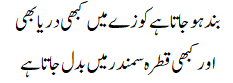
This couplet from the contemporary Urdu poet, Faryad Aazar, summarizes the essence of our videos:

‘Tis possible, at times, to shrink an entire river to a mere vessel,

At others, for a single drop to contain an entire ocean within.

*Assistant Professor, CBEC-SIUT, Karachi