
Dr. Adib Rizvi (right) and Dr. Anwar Naqvi (center) in conversation with Dr. Moazam (left) on CBEC’s terrace.
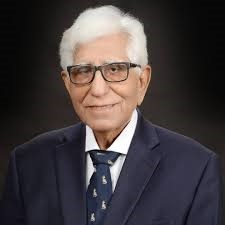
Professor Adib ul Hasan Rizvi, MBBE, FRCS
Professor Adib ul Hasan Rizvi is the Founding Director of the Sindh Institute of Urology and Transplantation (SIUT), the largest kidney transplant centre in Pakistan. SIUT’s interest in transplantation ethics catalyzed his vision to develop a Centre for Ethics at the institute with a broader mandate that includes bioethics education and advocacy. Over the past two decades, Professor Rizvi has continued to provide support and guidance to the Centre. He demonstrated the leadership and commitment to bioethics that were not visible at any other institution in Pakistan, both in the public and private sectors. CBEC-SIUT not only became the first bioethics centre, but it also remains the only one in Pakistan to date. This reflects the faith and commitment Prof Rizvi demonstrates in CBEC and its faculty.

Dr. Farhat Moazam, MD, Ph.D
Dr. Moazam served as a professor and the Founding Chairperson of the Centre of Biomedical Ethics and Culture (CBEC), SIUT of the Sindh Institute of Medical Sciences (SIMS) from its inception on October 8, 2004, till February 28, 2026.
Previously, Dr. Moazam was Professor and Founding Chairperson of the Department of Surgery (1985-1995) and the first Associate Dean of Postgraduate Medical Education (1995-2000) at the Aga Khan University (AKU) in Karachi. She is an American Board-Certified Pediatric Surgeon with an MA in Bioethics and a Doctorate (2004) from the Department of Religious Studies, University of Virginia (UVA), USA. Dr. Moazam’s doctoral dissertation was published titled Bioethics and Organ Transplantation in a Muslim Society: A Study in Culture, Ethnography, and Religion (2006, Indiana University Press, USA).
Dr. Moazam is Fellow of the Institute of Practical Ethics and Visiting Professor, Centre for Humanism in Medicine, UVA, and International Fellow of The Hastings Center, New York. In 2022, Dr. Moazam received the Hastings Center Bioethics Founders’ Award for her “accomplishments as a pediatric surgeon, educator, ethicist, ethnographic researcher and institution builder.” In 2014, she was awarded the Lifetime Achievement Award for promotion of bioethics education and ethical organ transplantation programs at the 5th National Bioethics Conference, Bangalore, India. She has an Honorary Doctorate from the University of Zurich, Switzerland (2012) for “her fundamental contributions towards ethics and organ transplantation in Pakistan.”
She served on the Board of Directors (2009-2014) of the International Association of Bioethics and has collaborated with World Health Organization on various projects including updating the international guidelines for ethical transplantation of human organs and tissues. She was a member of the WHO Ebola Ethics Working Group that formulated ethical guidelines for health professionals during global epidemics. Currently she is a member of the WHO Working Group on Clinical Ethics. She is a member of the National Bioethics Committee, Pakistan and chaired its subcommittee dealing with healthcare ethics education until 2018.
Dr. Moazam’s areas of interest in bioethics include research and education with a focus on cross-cultural ethics in clinical medicine. She has authored articles related to pediatric surgery, medical education, and bioethics in international journals that include The Cambridge Quarterly of Healthcare Ethics, Journal of Clinical Ethics, The Hastings Center Report, Asian Bioethics Review, Journal of Middle Eastern and South Asian Studies, Bioethics, and The Journal of Medical Health and Philosophy.

Professor Anwar Naqvi, MBBS, MS (Urology), FCPS
For over twenty years, Professor Anwar Naqvi played a pivotal role as a coordinator between the Centre of Biomedical Ethics and Culture (CBEC) and its parent institution, SIUT. A urologist and transplant surgeon by training, Professor Naqvi has been associated with SIUT since its inception. During his tenure at SIUT, he has remained consistently involved in its academic and administrative activities.
Dr. Naqvi’s vision and advocacy have helped shape CBEC’s current trajectory. Over the years, he has constantly provided support in bringing to fruition the various initiatives that CBEC-SIUT faculty have undertaken. These have ranged from initiating new academic programs to producing educational videos to meeting the ever-increasing logistical challenges faced by the growing needs of the centre.