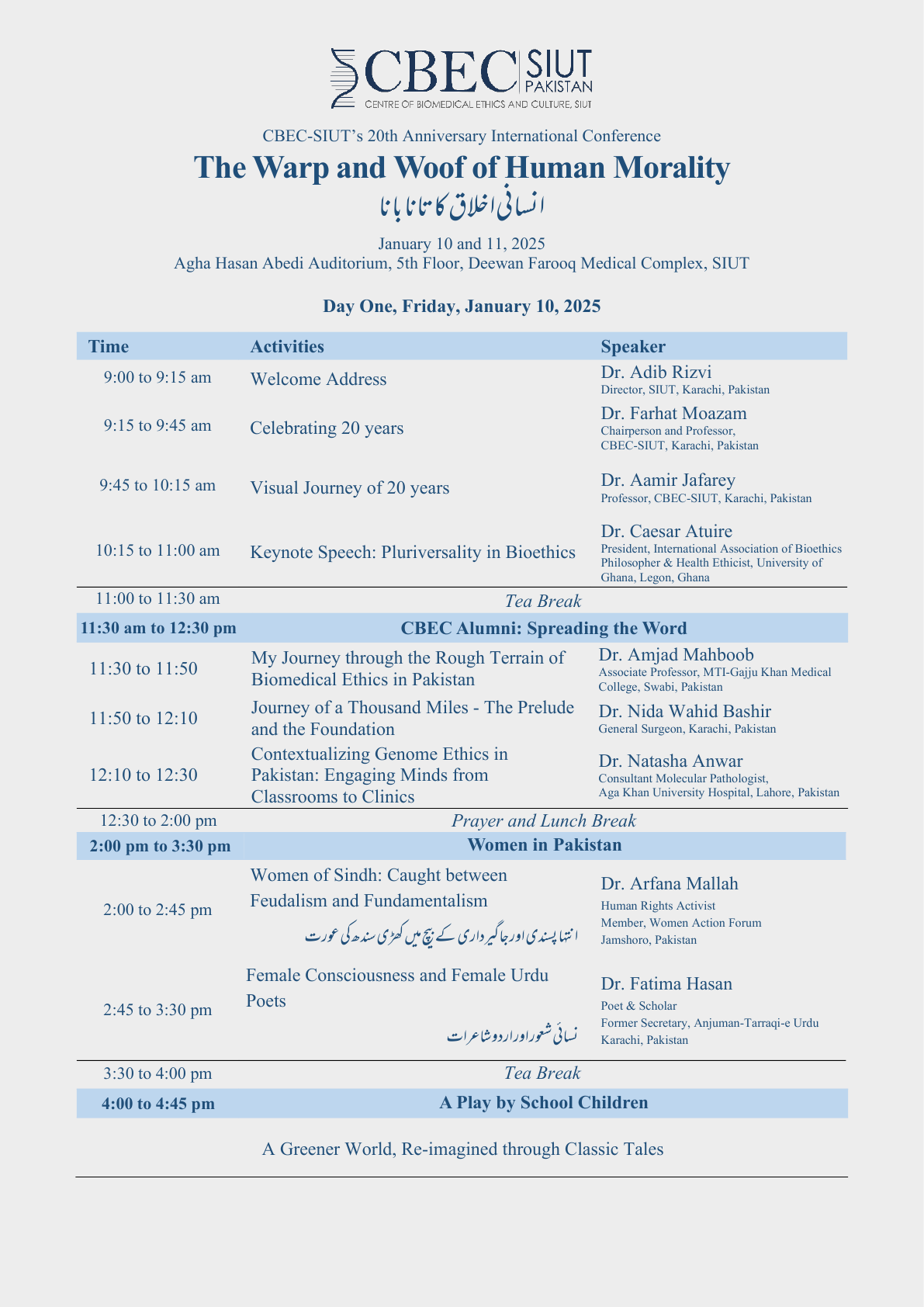
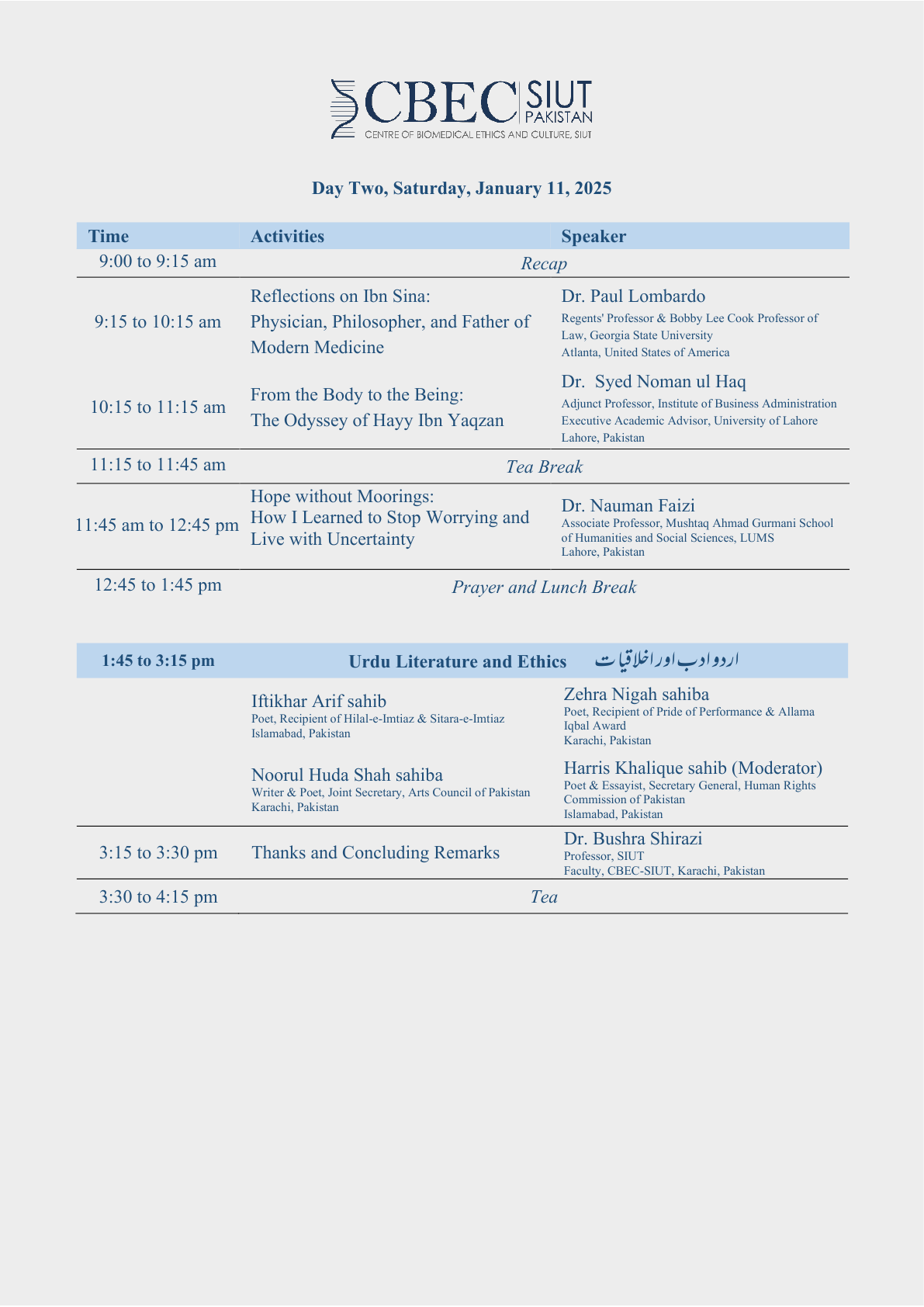
Category Archives: No Title

CBEC Video Wins Award in Barcelona

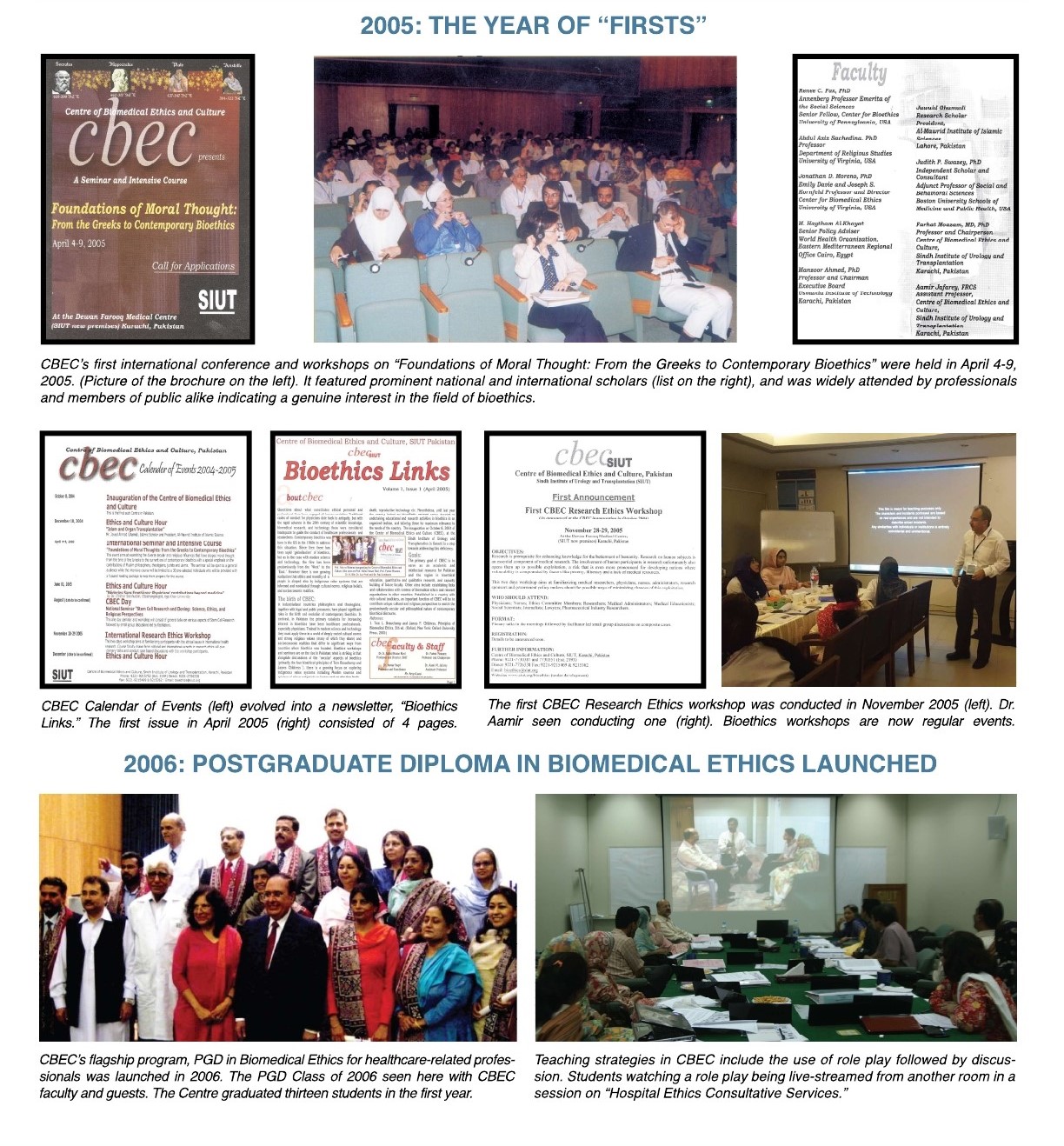
During the award ceremony on November 12, 2024, a brief clip of “Whose Life is it Anyway?” was screened. This was followed by an introduction to the series by CBEC faculty, Mr. Farid bin Masood (pictured above on the screen).

CBEC Video Wins Award in Barcelona

The newest addition to the Local Moral Worlds series titled, “Whose Life Is It Anyway?” focuses on issues of medical decision-making for unconscious patients. The story follows Aslam, a 60-year-old man admitted to the ICU following a stroke. As he develops pneumonia, his family must grapple with the difficult decision of putting him on a ventilator. The scenario highlights the role and influence of the extended family in such situations. This video has also recently won the runner-up prize in the ‘Audiovisual Award in Bioethics,’ organized by the Víctor Grífols i Lucas, Foundation in Barcelona, Spain, out of 151 global submissions.

The video is available on our website: https://bioethics.siut.org/cbec-videos/

ENHANCING BIOETHICS CAPACITY IN QUETTA, BALOCHISTAN

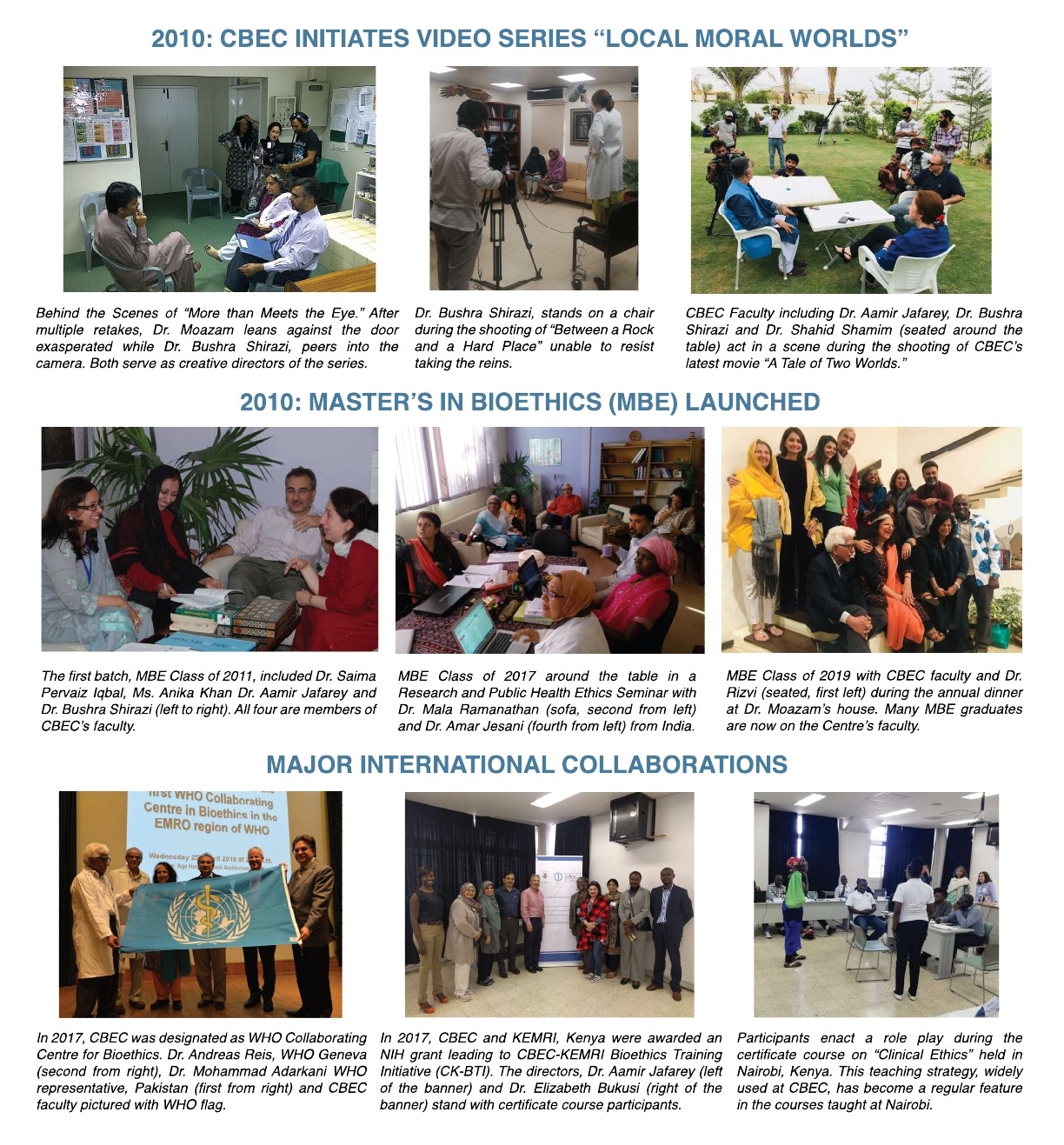
A group photo featuring Brig. Zain Niaz Naqvi, Vice Principal (sitting, sixth from left) and Dr. Rukhsana Majid (sitting, fourth from right) with CBEC Faculty and workshop participants. Participants included both civilians and members of the armed forces of Pakistan. Other faculty at Quetta Institute of Medical Sciences can also be seen.

ENHANCING BIOETHICS CAPACITY IN QUETTA, BALOCHISTAN

July 22-23, 2024

At the invitation of Dr. Rukhsana Majid, Head of the Department of Community Medicine, Quetta Institue of Medical Sciences (QIMS), CBEC faculty Dr. Farhat Moazam, Dr. Aamir Jafarey and Dr. Bushra Shirazi conducted a workshop titled “Introduction to Ethics in Health- care and Research.” This was the first time QIMS organized an event pertaining to biomedical ethics.

Thirty participants, including physicians, nurses and trainees from different institutions in Quetta, attended the workshop which covered basic concepts in clinical ethics including informed consent, and priva- cy and confidentiality. Sessions also highlighted distinctions between medical treatment and research along with a focus on publication ethics. The workshop was interactive and participants raised several issues that they faced in their daily encounters within clinical practice and research. Participants also approached the faculty to organize similar workshops in their institutions.

This workshop serves as an important milestone for ensuring the spread of bioethics education in Balochistan, a largely neglected province, and paves the way for other institutions in the region to develop their capacity in bioethics.

LOCAL MORAL WORLDS”: CBEC TEACHING VIDEOS WITH A DESI SPIN

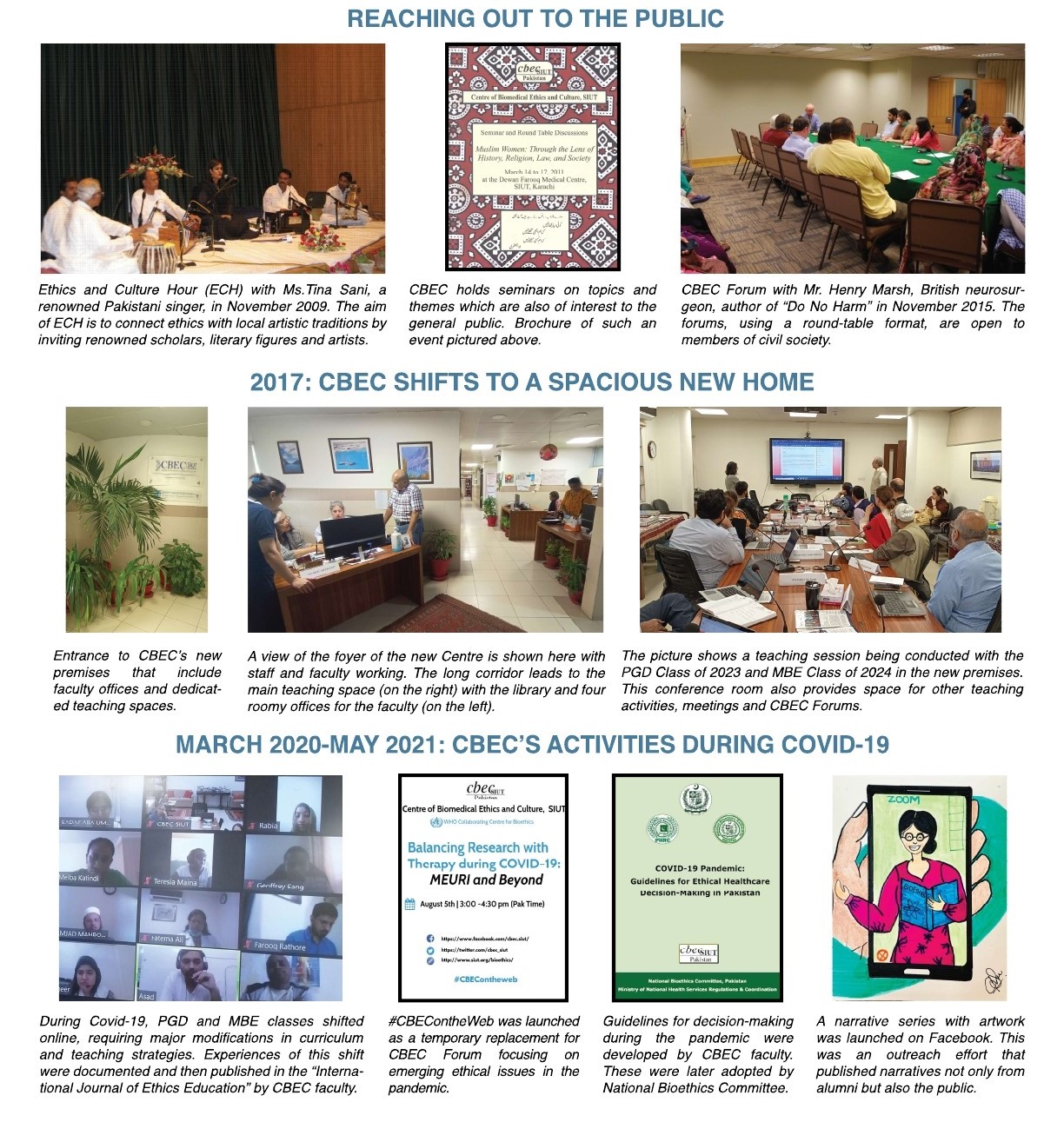
Quintessential Dr. Aamir: Energized by brewed coffee, bursting with excitement, ready to take on the challenges of the day.

LOCAL MORAL WORLDS”: CBEC TEACHING VIDEOS WITH A DESI SPIN

Sualeha Shekhani*

Arthur Kleinman, the renowned US-based psychiatrist and medical anthropologist coined the phrase “local moral worlds” to highlight how individuals experience the everyday, emphasizing the importance of context and relationships in understanding health and illness. We chose to use his term as the title of CBEC’s ongoing series of teaching videos to provide audiences an insight into how illness situations unfold in the Pakistani context.

Few videos exist that capture the ethical reality of clinical situations as they unfold in collectivistic cultures such as Pakistan. This deficiency led us to initiate producing teaching videos in 2010 embedded within the socioeconomic, cultural and religious realities of South Asia. Since then, CBEC has produced 12 videos that span from 10 minutes to 20 minutes for effective use in classrooms and during workshops. Our amateur productions offer a desi perspective, in a mix of Urdu and English, ensuring that the video clips resonate with local audiences. Many of these are based on case scenarios from real clinical encounters.

Consider the example of informed consent in clinical practice. While a universal standard, physicians in Pakistan may struggle with obtaining consent from a married woman who states that her husband takes all decisions on her behalf including the medical. How should physicians handle such situations where ethical principles of contemporary bioethics clash with the value systems of exisitng cultures?

A recent video focuses on aspects of decision-making in the case of an incapacitated patient who is a member of a large extended family. An upcoming one will cover issues related to obtaining assent in children for treatment within strong hierarchical family structures in which parents make decisions for their children, sometimes even beyond adolescence.

Our previous videos have highlighted local tensions that arise due to public health measures such as quarantine, and the influence of public mistrust of foreign researchers. While these aspects would be present in other contexts, the mores and responses to B such measures often play out differently in the local morals worlds of South Asia.

Our videos do not aim to provide answers to students. Rather they seek to reflect the ethical tensions in play from the Pakistani perspective, which may also be applicable to other South Asian countries. These then offer a microcosm of the sociocultural landscape so that students can reflect on the ethical conflicts between theory and practice.

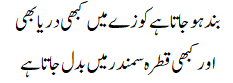
This couplet from the contemporary Urdu poet, Faryad Aazar, summarizes the essence of our videos:

‘Tis possible, at times, to shrink an entire river to a mere vessel,

At others, for a single drop to contain an entire ocean within.

*Assistant Professor, CBEC-SIUT, Karachi

IN THE BEGINNING WAS THE WORD…*

From Freepik

IN THE BEGINNING WAS THE WORD…*

Harris Khalique**

In art and literature, the global canons including our own embrace creatively written theological essays and summaries, faith-based parables, hymns and devotional poetry, religious music, and frescos and sculpture, etc. Later, in the 19th and 20th centuries, literature and music inspired by new political ideologies was also included. Such content and forms constitute a significant part of classical literature in many languages and our shared human civilizational history, impacting the individual and collective morality. Along with this, there were also resistance art and literature flourishing across cultures and civilizations.

After the Renaissance in Europe and arrival of the Romantic and Modernist literary movements, the age came when Karl Marx and Sigmund Freud deeply influenced the human mind. These developments were followed by de-colonisation and national liberations leading to a different appreciation of art and literature. It is contemporary literary criticism that promotes the role of political non-conformism and the critique of power at the heart of creative expression.

Apart from those involved in artistic pursuits or academic activities, the popular imagination even today would see ethics and morality as ideas leading to an individual’s submission to abstraction and divinity, and her subscription to social conservatism based on culture or tradition. On the contrary, the most powerful piece of art that moves you the most is the one which critiques and subverts the past and the present. Therefore, I find myself a little puzzled in how to approach the question the worthy editors want me to explore: “How does Urdu literature speak to the moral self that we bear today?”

This exploration may help understand if literature shapes the way we make judgments or take actions in our daily lives. Being a minor student of literature who has little or no theoretical grounding in psychology, cognitive science or ethics, I am responding to this question from a personal point of view using my hazy literary lens.

Urdu is a relatively new language compared to other major languages that are spoken in our part of the world. It is twinned with Hindi and both were together called by a variety of names including Hindi, Hindvi, Hindustani, etc. before registers were standardized anew by the British. Several dialects of Urdu were spoken in Deccan, Rajasthan and Punjab. However, it started becoming the lingua franca of Northern India with Deccan as an outpost in the South in the 17th century. In late Mughal court days and across many native states in the Subcontinent, people started using the language for ordinary conversations among them. The British made it into a semi-official and legal language for local legislators and lower courts. However, English remained the language of real power and Urdu remained subservient to English in the linguistic hierarchy. But due to being the lingua franca, it also became the language of resistance in anti-colonial and progressive political movements. Since those using Urdu by far outnumbered its native speakers, whatever was produced in the language reached greater number of people.

Urdu literature has contributed in shaping the worldview of its readers from the beginning but it was not until the 19th century, particularly after the 1857 War of Independence, that it assumed a definitive role in defining the moral and political choices its readership made and its indirect downstream consumers through its varied readership. Sir Syed Ahmed Khan and his comrades were at the helm of the reformist movement. Interestingly, there is also an enormous body of religious literature in Urdu – not just about Islam but Hinduism and Christianity. But we are concerned here with literary writing.

After the sketchy background about Urdu literature and its relationship with our moral self, let me come to this day and age. In 2024, Urdu literature speaks to the moral self of two different kinds of persons. Both of them may want to act ethically with different ideological imperatives and conflicting social demands. One person comes from the Islamic religious strand and the other from the secular civilizational strand. In recent literary writing, from Qudratullah Shahab and Ashfaq Ahmed to Bano Qudsia and the likes resonate with the first kind of person. From Rajinder Singh Bedi and Saadat Hasan Manto to Fahmida Riaz and likes will resonate with the second person. Then there are many third, fourth or fifth persons who navigate and oscillate between the two types, knowing that there are only shades of gray in our world. Urdu literature continues to speak to its readers and impacts them in different ways. At the end of the day, it is art. To each his own.

*(John 1:1)
**Poet and Essayist; Secretary General, Human Rights Commission of Pakistan (HRCP), Islamabad, Pakistan

CARING: THE BASIS OF OUR LIVES

Photo by Rod Long on Unsplash

CARING: THE BASIS OF OUR LIVES

Priya Sharma*

It takes a village to raise a child. This African proverb was quite true when it came to my childhood. Growing up in a remote Indian village on the lower foothills of the Himalayas, I would rarely be found in my own house. When I was little and it wasn’t a school day, I would bathe at someone’s place, take a nap at another’s, and eat at yet another’s. Such communal caring is embedded in the way our lives are structured in many parts of South Asia, especially in rural areas. More often than not, these are women from extended families or neighboring households who have become kin over time who help distribute the caring responsibilities, especially towards children. However, caring responsibilities are not only towards children, they are also towards the elderly, the contemporaries, the sick, the farm, and the larger society we live in. Navigating various competing needs and sustaining relationships across conflicts and vulnerabilities underlie such caring. It further helps sustain life but can also exhaust the one doing the caring. In this piece, I look at ‘care’ as a deeply embedded value in our lives and ask how we can care for the ones who care. Probing us on the basic necessity of care in our lives, I aim to reflect on how we can make care more just and fair so that we do not end up disproportionately burdening women or people from marginalized sections with this life-sustaining task. I draw from and build on the work of feminist scholars for this reflection.

In our culture (in India, the larger subcontinent, and the diasporic community) as well as the other indigenous cultures, the relational nature of our very being more or less always takes center stage. However, this relational nature is also true for more individualized societies, something that feminist ethics of care, a moral and political philosophical perspective brings our attention to. Feminist care ethicists centralize care while talking about moral action and how we can move towards a more just world. Care is what makes us who we are. We all are vulnerable and interdependent. Care is fundamentally basic as one requires care right from the time one is conceived to the time one dies and in many cultures one is cared for, ritually, even beyond that. For example, in my village where all families are upper caste Brahmin Hindus, each year we have community rituals and feasts in the memory of our ancestors known as Shraadhs. Through this, we remember and thank our ancestors. As I write this piece, we are preparing to mark my paternal grandfather’s first death anniversary with prayers and a communal feast. So care is entrenched in our ways of life.

However, when it comes to routine tasks of caring, it is mostly women who are tasked with this labor. Of course, the one who provides the financial support for the family cares for it, however at times that support is regarded as superior to the actual physical tasks of caregiving. This has to do with the way these tasks, performed by certain sets of people (mostly women and other marginalized communities) in homes (and beyond), have become so deep-seated in our lives that they seem almost natural. It seems that certain people are naturally ordained or meant to do these tasks. While any of us could be more inclined to certain tasks in life, such naturalization especially around care obscures the fact that it is actual labor. It involves feelings of care but also the actual work of care. Moreover, the paid productive work is sustained because someone does the unpaid care work. This work of looking after the household, children, elderly, and even cattle and farm reproduces not just the worker who goes out for a paid productive job but every other member as well as the society at large. Furthermore, feminist scholars have included the very act of birthing and maintaining kinship networks as a part of this, putting all of this under social reproduction. However, the privatized nature of unpaid care work masks its “labor” aspect and rather makes it seem as if women or people from marginalized sections are somewhat naturally meant/wired to do these tasks.

No one can deny the labor that goes into gestating and birthing a child, be it for oneself or for another like in surrogacy (and in latter the labor component, both bodily and epistemic, becomes all the more apparent). It is something that a female birthing body has the incredible capacity to do, if they want to. It is a potential that can or cannot be there in people born with uterus, which even if they have, they could choose to harness or not as per their contextual decisions. In either case, the caring labor they put into caring for themselves and the babies (if any) also requires care to be sustained. It is an act of deep caring to let people decide if they want to birth or parent children and how, one of the basic tenets of the Reproductive Justice movement and framework. If they choose to birth and parent, slowly the tasks that follow do not remain solely tied to female anatomy and hence can and should be divided amongst other members of the household and larger society.

Given care forms such an important component of our social fabric, it only makes sense to bring its actual labor component to the forefront and ask how we can make it more equitable. The division of caring responsibilities like with childcare or looking after the cattle for someone if they have to urgently go somewhere etc., especially in communities like the one I have grown up in, helps distribute the burdens of care to some extent but it still remains within the ambit of larger circles of women. We need to enlarge this circle by making sure that everyone partakes in caring, including the state, so that the very life-sustaining task of caring doesn’t suck the life out of the ones doing it.

As people move out of their parental homes and hometowns due to education and work opportunities, and set up neolocal households even in South Asia which has largely been patrilocal, the state’s responsibility both in terms of affordable childcare, elderly care, and care for the terminally ill amongst other things becomes pertinent. Work is now also being more justly divided between the partners sharing a household. Moreover, communities always help, they do, and one would want to have such networks even around their neolocal residences but it is not always possible. Hence the state needs to step in when it comes to providing care.

We are interdependent, relational, vulnerable beings and this entanglement is not just with each other but also with the larger environment we inhabit. We need to thereby take the communal idea of care towards our very surroundings to make sure we also maintain the conditions necessary for our survival going ahead. We all require care to survive– that is the fundamental human condition, but some require it more than others depending on age, health, or ability status. It is also true that we all have the potential to care without being patronizing. So let us! Realizing the centrality of care in our lives and its ethical potential will help us move towards more peaceful, healthier, happier, and just worlds.


*Assistant Professor, T. A. Pai Management Institute (TAPMI), Bengaluru, India

Importance of Bioethics

Dr. Abdul Wahab Suri in a session on “Philosophy and Bioethics” during the Foundation Module. His sessions continue to remain among the most popular with students, many of whom are healthcare related professionals.

Importance of Bioethics: Reflections of A Philosopher

Abdul Wahab Suri*

The Centre of Biomedical Ethics and Culture (CBEC) in SIUT, still the only center in this discipline in Pakistan, will celebrate its 20th anniversary this year. Soon after the Center’s inception, Dr. Manzoor Ahmed, my teacher and the doyen of philosophy in this country, introduced me to Dr. Moazam and since 2006, I have been part of CBEC’s teaching faculty. During the Foundation Module, I introduce basic philosophical concepts, and their deep, historical connection to ethics, to students enrolled in the Center’s Postgraduate Diploma and Master’s in Bioethics programs.

human subject research or are practicing physicians who take care of patients and fight to save their lives. They are therefore individuals responsible for making decisions that can have serious moral and social consequences. Among my challenges is to help students realize the relationship of the biological human body with human metaphysical and social domains, and to grasp that the connection of the sacred/spiritual to the secular/temporal spheres in life, especially in Pakistan, is important in the totality of healing.

Establishing a formal institution of bioethics is presumed by some as a luxury to aspire to in a low middle-income country with a post-colonial society. Perhaps it is considered too daunting a task to critically discuss the moral challenges in a country where resources are severely limited and access for many to healthcare services is far less than optimum. In fact, these very factors make education in bioethics imperative.

The growth of bioethics as a distinct field of knowledge, considered to be the intersection of life sciences with ethical issues, has increased substantively around the world. The term “bioethics” was first used by Van Rensselaer Potter in the 1970s. According to him, it is “biology combined with diverse humanistic knowledge forging a science that sets a system of medical and environmental priorities for acceptable survival.”1

Potter revisited the notion of survival in a profound manner. His definition of survival did not merely imply biological survival. He believed that the comprehensive survival of human beings as a species cannot be guaranteed through ahuman,  positivistic  and  naturalistic  methodological investigations. The field of bioethics is therefore necessary since a solely objective understanding of human beings risks crossing the normative limits necessary for continuing existence on earth.

Hard sciences like biology, genetics, pharmacy, biochemistry, microbiology that rely on objective scientific facts and positivistic scientific methodologies, require incorporating the human element that is provided by humanities, philosophy and religious studies. The birth of modern medicine and its increasing reliance on biomedical technology and objectivity has excluded this feature from the practice of medicine. The growth of science/technology and unregulated research combined with the human desire to control nature and time requires ethical circumspection and tempering. This makes programs in bioethics education not a luxury, but a necessity in contemporary times.

My aim in the bioethics programs at CBEC has been to enable students not to merely understand philosophical terms and concepts, but to provoke them to move beyond scientific, positivistic ways of thinking and to engage with abstract concepts, and the ways in which these play out in their interactions with patients and families. I consider my contributions to the process of enhancing the conceptual capacities of healthcare professionals, front line soldiers in creating a healthy Pakistan, among my most meaningful roles as a teacher. It has been an honor to work with CBEC and its faculty who have made it their life-long mission to build ethics capacity in the country.

Reference:

[1] For details see, Potter, V R (1971): Bioethics: Bridge to the Future (Princeton, NJ: University of Princeton Press) quoted in Vijay Kumar and Deepak Kumar Bioethics, Medicine and Society: A Provocative Trilogy, op.cit. p 13.

*Professor, Department of Philosophy, University of Karachi, Pakistan

Messages by Dr. Adib Rizvi, Director, SIUT & Patron, Sindh Institute of Medical Sciences

Dr. Adib Rizvi (right) and Dr. Anwar Naqvi (center) in conver­ sation with Dr. Moazam (left) on CBEC’s terrace.

Messages by Dr. Adib Rizvi and Dr. Anwar Naqvi

Message, Dr. Adib Rizvi, Director, SIUT & Patron, Sindh Institute of Medical Sciences

Our initiative at SIUT to establish the country’s first bioethics centre was a leap of faith. I am delighted to see that it has not only flourished, but has contributed meaningfully to the development of this neglected interdisciplinary field in the country.

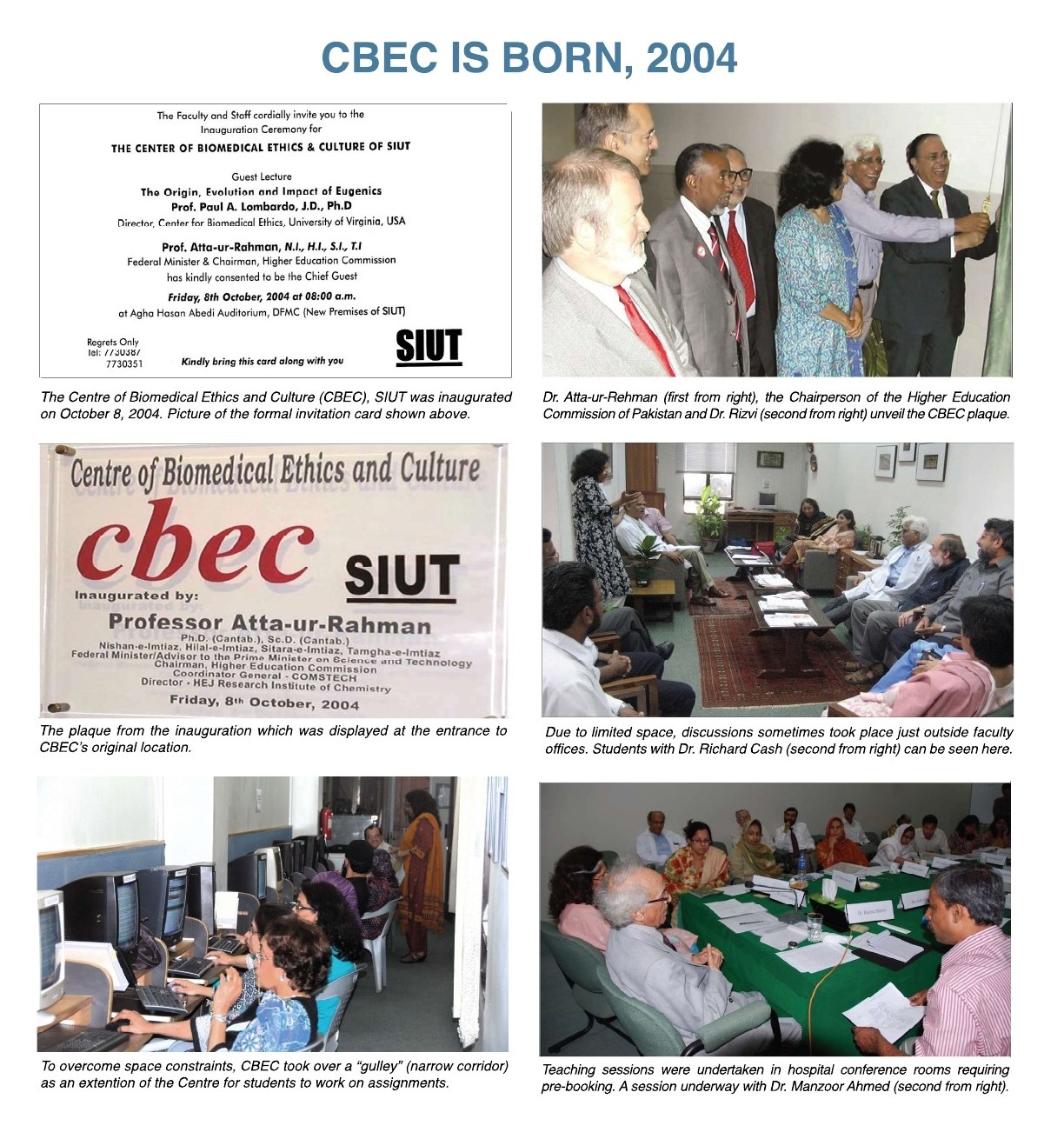
My interactions with Dr. Farhat Moazam during her doctoral research in 2002 convinced me she should lead SIUT’s first bioethics center. The Centre of Biomedical Ethics and Culture (CBEC) at SIUT has since made significant progress, enhancing ethics capacity nationwide through educational events. Since establishing Pakistan’s organ transplant program, SIUT has strived to ensure ethical practices, with CBEC advancing this mission through research and education.

In line with our ethos and policies in SIUT, we offer free medical treatment and free education to those we serve. CBEC therefore offers free postgraduate education in bioethics to all those who are selected in their programs. Additionally, the Centre also conducts free of cost workshops for national institutions and helps them to establish ethics committees. Looking ahead, I hope CBEC can enhance its impact in Pakistan, especially in clinical ethics, supported by its growing alumni network. SIUT resources will always be there for CBEC to further its mission.

Message, Dr. Anwar Naqvi, Rector, Sindh Institute Medical Sciences

I have been closely involved in the evolution of CBEC-SIUT since 2004, when I was given the role of SIUT coordinator for the Centre. The initial years were a challenge in integrating CBEC activities with SIUT, a solely healthcare provider institution. However, my role as a bridge between the two proved to be very rewarding. Over the past two decades, I have seen with pleasure CBEC attaining national and international prominence.

SIUT was the first institution in Pakistan to commit resources to foster bioethics by financing CBEC, and its academic programs. The Centre has utilized these resources effectively to provide an academic platform for bioethics in Pakistan. I hope to see CBEC maintain the high standards that it has set as it moves into its third decade and beyond.

WORLD CONGRESS OF BIOETHICS

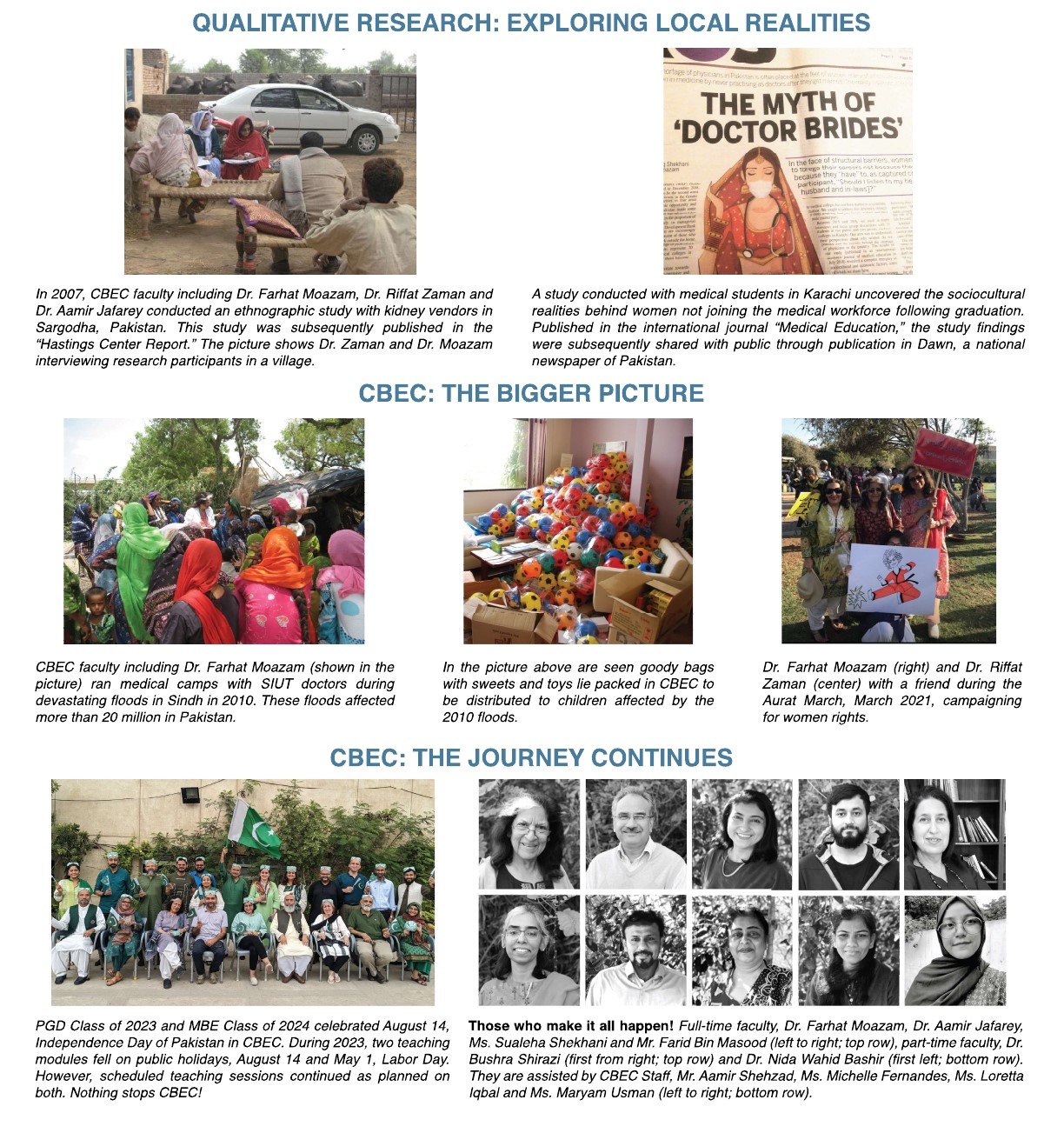
CBEC faculty at the World Congress of Bioethics in Doha, Qatar along with Dr. Mohammed Ghaly, Chairperson of the WCB (standing, fourth from the left). Other delegates from Pakistan can also be seen in the photograph.

WORLD CONGRESS OF BIOETHICS, QATAR, JUNE 3-6, 2024

Since 1992, the International Association of Bioethics (IAB) organizes a biennial World Congress of Bioethics (WCB) in different countries. This provides a global forum for exchange of ideas and networking between those involved in education and research in bioethics and related fields.

This year, the 14th WCB was hosted by Research Center for Islamic Legislation and Ethics (CILE) at the Hammad Bin Khalifa University in Doha, Qatar. The conference theme was “Religion, Culture, and Global Bioethics.” One of the main organizers and the Chairperson of the WCB, was Dr. Mohammad Ghaly, Professor at CILE.

The 2024 conference marked a historic occasion as it was the first time the WCB was held in the Middle East, and in a Muslim Arab country. This IAB decision in 2022 sparked a debate among bioethicists globally with concerns raised about Qatar’s human rights record and its stance on certain bioethical issues including laws related to the LGBTQ community. Many however, defended the choice, arguing that the conference’s location in Qatar would foster engagement with a cultural­ ly diverse audience from Asian and African countries.

The Doha WCB was widely attended, providing a vibrant platform for knowledge exchange and collaboration. A notable characteristic of the conference was an effort to bring religion into the bioethical discourse. There were rich discussions on ethics of research on the genome and concerns associated with artifical intelligence technologies.

During the conference, CBEC faculty was actively involved in workshops, panel discussions, and oral presentations. Dr. Moazam also delivered a keynote address titled “Doing Bioethics in Pakistan,” where she used local case studies to illustrate the sociocultural nuanc­ es and ethical challenges in Pakistani clinical practice.